Diabetic retinopathy is a complication of diabetes that damages the blood vessels of the retina, the light-sensitive tissue at the back of the eye. It is one of the most common causes of vision loss in adults, and it often develops with few or no early warning signs. With regular eye care and timely treatment from a retina specialist, most people can protect their sight.
Diabetes affects the eye when consistently high blood sugar weakens the small retinal blood vessels over time. As these vessels deteriorate, they can leak fluid or bleed, and in advanced cases, the retina can grow fragile new vessels that lead to further complications. This process can cause two sight-threatening problems: diabetic macular edema and neovascularization.
Both problems can lead to vision loss.
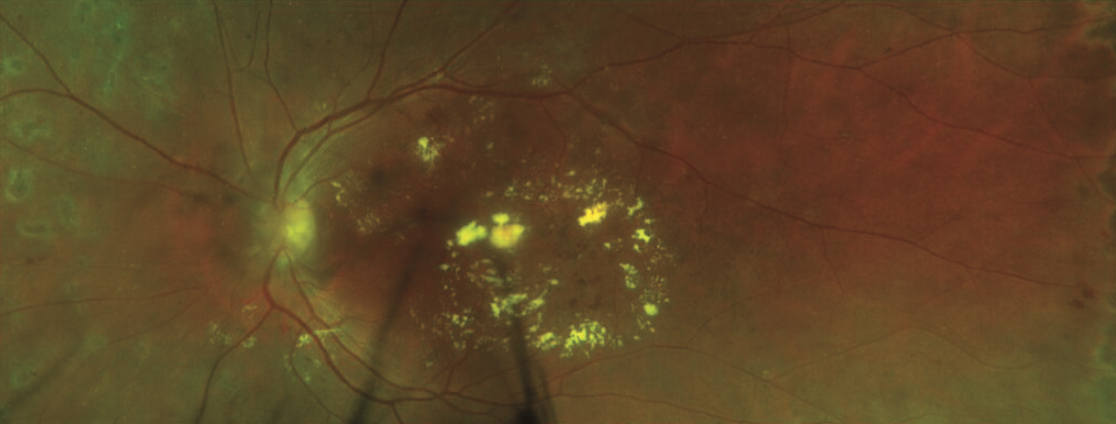
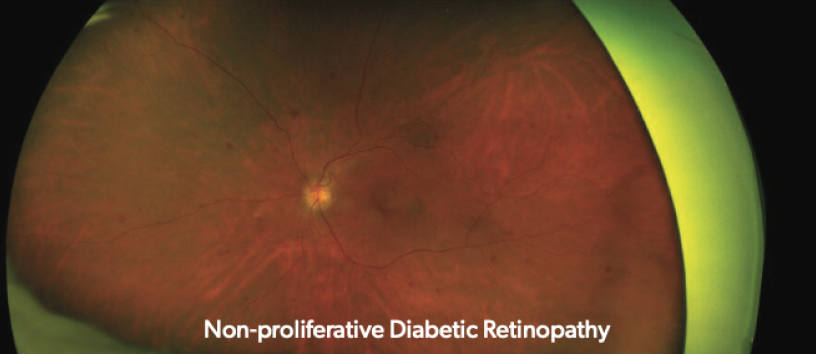
Diabetic retinopathy is grouped into two main forms based on whether abnormal new blood vessels have started to grow.
Non-proliferative diabetic retinopathy is the earlier and more common form of the disease. In NPDR, the weakened retinal blood vessels develop tiny bulges, leak fluid, or become blocked, but no new vessels have begun to grow yet. NPDR moves through mild, moderate, and severe stages and may cause no symptoms at all in its early phases.
Diabetic Macular Edema (DME)
Diabetic macular edema is not a separate stage but a complication that can occur at any point in NPDR or PDR. It develops when leaking vessels allow fluid to build up in the macula, the part of the retina responsible for sharp, central vision. DME is the leading cause of vision loss among people with diabetes, which is why it is watched for closely at every stage.
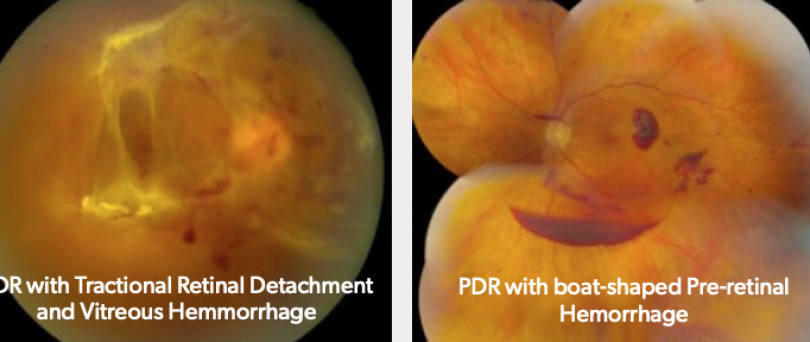
Proliferative diabetic retinopathy is the advanced form of diabetic retinopathy, defined by neovascularization. These abnormal new vessels grow in the wrong place and are fragile. They can bleed into the eye, causing vitreous hemorrhage, or they can pull on the retina, causing retinal detachment.
Vitreous hemorrhage is often sudden and painless and may appear as cobweb-like floaters or block vision entirely. Severe pulling on the retina can cause a retinal detachment, which can lead to irreversible vision loss in some cases.
Diabetic retinopathy progresses through four stages. Knowing the diabetic retinopathy stages helps guide how closely the eye needs to be monitored and when treatment should begin. The first three stages are non-proliferative, and the fourth is proliferative.
Because the earliest stages often cause no symptoms, many people do not know they have diabetic retinopathy until it has progressed. Regular dilated eye exams are the most reliable way to catch retinopathy early, when treatment works best.
In its early stages, diabetic retinopathy frequently causes no symptoms at all, which is what makes it so dangerous. The symptoms of diabetic retinopathy tend to appear only as the disease advances, and by then some damage may already be done. Common symptoms can include:
Because visual changes may not be obvious until the disease is advanced, anyone with diabetes should have their eyes examined every year by an ophthalmologist, even when their vision seems fine. Recognizing diabetic retinopathy symptoms early gives you the best chance to act before vision is affected.
The longer a person has diabetes, the more likely they are to develop diabetic retinopathy. Research has found that non-proliferative diabetic retinopathy is present in roughly 80 percent of patients about 15 years after their diabetes diagnosis. Nearly everyone with long-standing diabetes will show some signs of the disease over time.
The severity of diabetic retinopathy is closely tied to blood sugar control. Keeping blood glucose within a healthy range can greatly reduce how quickly the disease progresses, along with other complications of diabetes throughout the body. Keeping blood sugar under control also reduces the risk of developing vision loss, even if some diabetic retinopathy is present.
Most patients are advised to aim for a hemoglobin A1C below 7, though the right target can be higher or lower depending on age and other health conditions. The ideal A1C is best determined by the primary care physician or endocrinologist managing a patient’s diabetes.
A thorough, dilated eye exam is the foundation of diagnosing diabetic retinopathy. During a diabetic eye exam, we test your vision, place drops to dilate your pupils, and carefully examine the front and back of the eye. Because dilation blurs near vision for a few hours, it is best to bring a driver to your appointment.
We recommend that everyone with diabetes have a dilated diabetic eye exam at least once a year, and more often if retinopathy has already been found. Catching changes early gives us the best opportunity to protect your vision. To schedule your exam, request an appointment at any of our locations.
People with diabetic retinopathy may have several tests to evaluate their condition, including:
Treatment depends on the type and severity of the disease and on whether diabetic macular edema is present. The goal is to stabilize vision and reduce the risk of further loss. Our retina specialists use several proven approaches, often in combination.
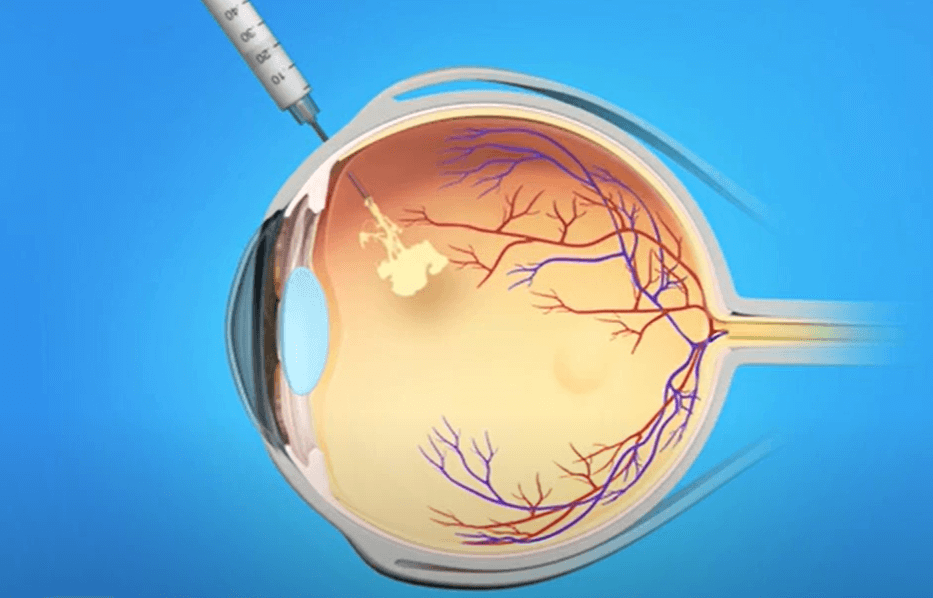
Intravitreal injections are commonly used to treat diabetic macular edema and can also stabilize or improve the underlying retinopathy. The medication, an anti-vascular endothelial growth factor (anti-VEGF) drug such as Lucentis, Eylea, Avastin, Vabysmo, or other biosimilars, is placed directly into the eye.
The procedure is done in the office with only a local anesthetic. Depending on the severity of the disease and the amount of macular edema, injections may be needed as often as once a month. You can read more in our guide to eye injections for diabetic retinopathy.
Laser photocoagulation is a standard treatment for diabetic retinopathy and for select cases of DME where the swelling is not in the center of the macula.
Laser treatment is meant to stabilize vision and lower the risk of complications, and it usually does not produce noticeable improvement in sight. It is performed in the office and is well tolerated after numbing drops are applied.
Vitrectomy surgery is used in advanced diabetic retinopathy. This outpatient surgery is usually done with sedation and local anesthesia. Using tiny instruments under a microscope, the surgeon removes vitreous hemorrhages and/or scar tissue pulling on the retina.
Laser treatment may be done during the same surgery. In cases of diabetic retinal detachment, a gas or silicone oil bubble may be placed in the eye to support the retina while it heals.
Often, there is no noticeable first sign. Early diabetic retinopathy usually develops silently, without pain or vision changes, which is why annual dilated eye exams are so important for anyone with diabetes.
When symptoms do appear, people often describe blurred or fluctuating vision, dark floaters, or blank spots. Sudden, heavy floaters or a rapid loss of vision can signal bleeding or a retinal detachment and should be treated as urgent.
Diabetic retinopathy cannot be fully reversed and has no cure, but early detection and timely treatment can often slow or stop its progression and protect vision. Read our full guide on whether diabetic retinopathy can be reversed for more detail.
Treatment is tailored to the stage and may include eye injections, laser, or surgery, alongside good control of blood sugar and blood pressure. The aim is to preserve vision and prevent further damage.
The most effective steps are keeping blood sugar, blood pressure, and cholesterol well controlled and getting yearly eye exams. Good diabetes management does not guarantee prevention, but it significantly lowers the risk and slows progression.
It typically develops over years rather than suddenly, and risk rises the longer a person has diabetes. Because it can advance without symptoms, regular screening is the only reliable way to catch it early.
s a Center of Excellence for diabetic eye disease, the physicians at Mid Atlantic Retina take part in the latest clinical trials and new therapies for treating diabetic retinopathy. To learn more about our studies, visit our Research page.
If you have any signs or symptoms of diabetic retinopathy, contact us today to meet with a Mid Atlantic Retina specialist. While there is currently no cure for diabetic retinopathy, our team can work with you to protect your vision and minimize complications.
If you have any signs or symptoms of diabetic retinopathy, contact us today to meet with a Mid Atlantic Retina specialist. While there is currently no cure for diabetic retinopathy, our team can work with you to protect your vision and minimize your complications.
Diabetic retinopathy affects the blood vessels in the retina and can, if left untreated, lead...
It’s Diabetic Eye Disease Awareness Month, and a great time to get more familiar with...
