Medically reviewed by: Mid Atlantic Retina Team
Last updated: 21st July, 2026

This article is for educational purposes only and is not a substitute for personalized medical advice from your retina specialist.
If you have recently been diagnosed with wet age-related macular degeneration, you likely have a lot of questions. It is also common to feel uncertain about what treatment may mean for your vision and daily life.
Wet AMD progresses faster than dry AMD, which makes early treatment especially important. The encouraging news is that treatment options have advanced significantly over the last two decades. Today, many patients are able to preserve central vision, and often experience measurable improvement when treatment begins early.
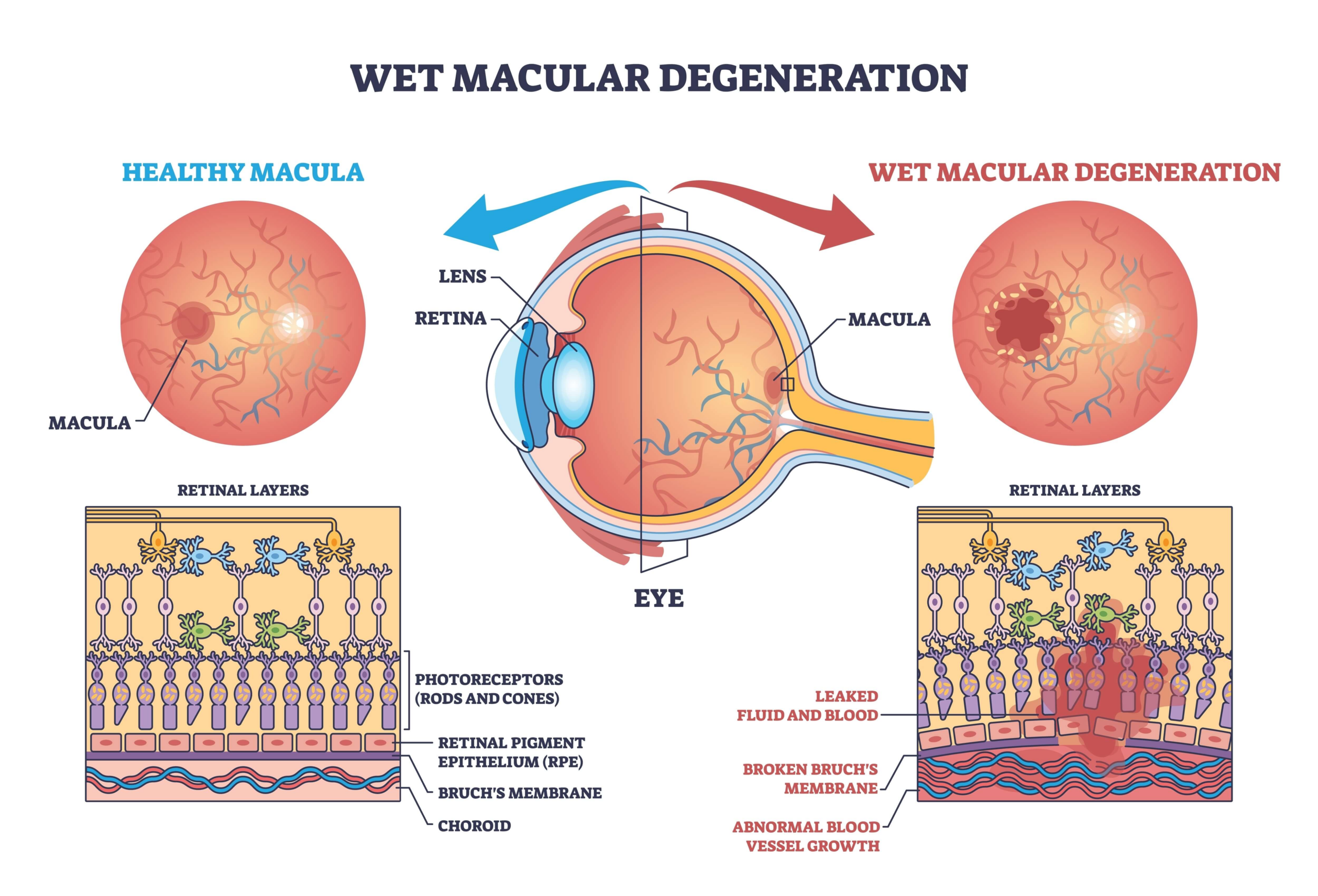
Wet AMD develops when abnormal blood vessels begin growing beneath the center of the retina in an area called the macula. These vessels leak fluid or blood, which damages the light-sensitive cells responsible for central vision. Without treatment, damage can progress quickly.
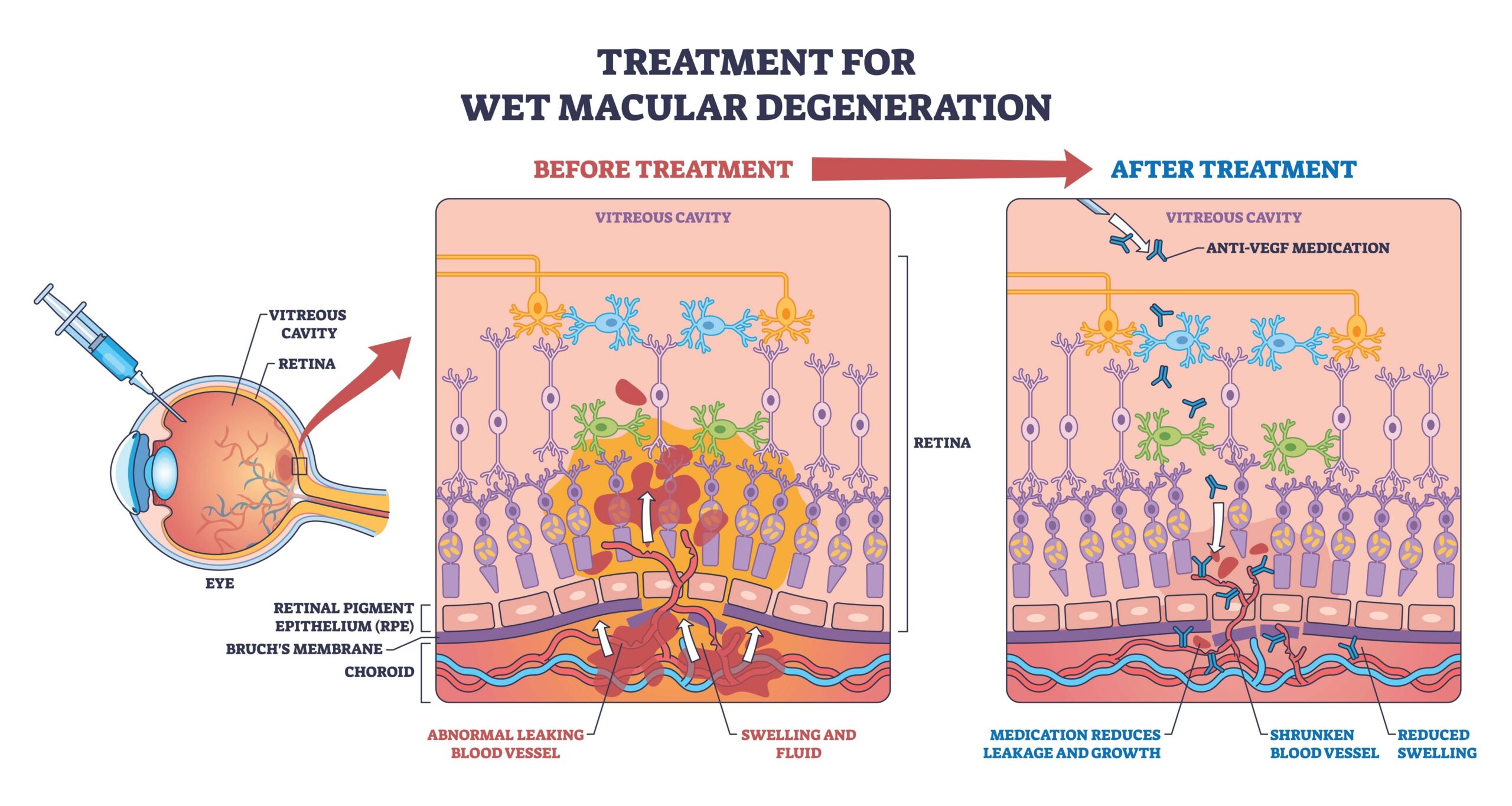
The primary treatment for wet AMD is a group of medications called anti-VEGF therapy. VEGF stands for vascular endothelial growth factor, a protein the eye produces in excess in wet AMD. This protein triggers abnormal blood vessel growth.
Anti-VEGF medications block VEGF in the eye, preventing new vessels from growing and thereby stopping leakage. Once the abnormal vessels stop leaking, fluid begins to reabsorb, and the abnormal vessels can shrivel up, both of which may improve vision.
Because the medication must reach the back of the eye, treatment is delivered through a small injection performed in our office.
If you would like to learn more about the procedure, reading about eye injections for macular degeneration can help you understand what to expect before, during, and after treatment.
One important point to understand early is that wet AMD treatment is ongoing. This is not a one-time procedure. How often treatment is needed depends on your specific condition, but setting realistic expectations from the start can help you feel more prepared.
Wet AMD treatment options have expanded considerably over the past 20 years. Here are the primary categories available today.
Anti-VEGF therapy remains the standard treatment for wet AMD. Earlier anti-VEGF medications often required monthly injections to keep disease activity controlled. For many patients, this approach continues to work well.
Newer medications have made longer treatment intervals possible for many patients. After an initial phase with more frequent injections, many patients can extend treatment to every eight weeks or longer while maintaining disease control.
A newer treatment option uses a refillable implant placed in the eye rather than repeated injections. This implant releases medication gradually over time, reducing the frequency of office visits. It may be a good option for select patients and represents a newer approach to long-term treatment management.
Biosimilar versions of anti-VEGF medications are now available as well. These options give retina specialists additional flexibility when determining the most appropriate treatment plan for each patient.
Laser treatments including photodynamic therapy are used less frequently nowadays. In certain clinical situations, these therapies may still be appropriate, often as an additional treatment along with anti-VEGF injections.
Mid Atlantic Retina has been a leader in helping bring new treatments to our patients for 50 years. We are one of the few centers in the country that are actively involved in a number of clinical research programs that have the potential to enable patients to have the benefits of treatment with options such as gene therapy that can last for years, as well as some newer injections that may allow us to achieve better visual outcomes and/or last longer than our current treatments.
One of the first questions many patients ask is how often treatment will be needed and how long it will continue. The answer varies from patient to patient, but most treatment plans follow a similar pattern.
Treatment often begins with injections given at regular intervals, often monthly, until the condition stabilizes. The time it takes for this to happen varies per patient, but it often takes at least a few months. The goal is to quickly reduce retinal fluid and bring disease activity under control. Many patients notice vision improvement during this stage.
Once the retina stabilizes, treatment usually shifts into maintenance. A common strategy is called treat-and-extend. If imaging shows the retina remains stable, the time between injections gradually increases. If signs of disease activity return, the interval shortens again.
This adjustment process is expected and helps us tailor treatment to each patient’s needs. During maintenance, some patients receive injections every eight to 12 weeks. Others require more frequent visits. Imaging results guide those decisions.
For many patients, treatment continues for years. Wet AMD is a long-term condition, though some patients may reach extended periods of stability. Regardless, stopping treatment completely is uncommon.
Ending treatment without medical guidance can also increase the risk of disease reactivation and vision loss. Regular visits to your retina specialist will likely become part of your routine.
At each appointment, imaging is performed, usually using OCT, or optical coherence tomography. This allows your specialist to closely evaluate the retina before deciding whether to adjust your treatment.
Wet AMD treatment is highly individualized, so the right treatment plan depends on several factors unique to your case. Our retina specialists work closely with patients to adjust treatment plans as needs change over time.
Your retina specialist will consider:
Treatment plans often change over time. A medication that works well initially may need adjustment later. New therapies continue to become available. Thus, ongoing communication between you and your retina specialist plays an important role in long-term care.
Questions worth asking your retina specialist include:
If you have concerns about injections, scheduling, or treatment expectations, discuss them openly with your specialist. We believe patients make stronger decisions when they understand the process clearly.
At Mid Atlantic Retina, our physicians do more than treat wet AMD. Many have helped advance the therapies used across the field today.
Our physicians have participated in clinical trials spanning multiple generations, contributing to research that has expanded patient options over the past two decades.
One example is Carl Regillo, MD. Dr. Regillo served as principal investigator in the pivotal clinical trials for Susvimo, an FDA-approved port delivery system that continuously releases wet AMD medication into the eye.
Our work contributed directly to FDA approval and helped create a new option for patients seeking alternatives to traditional injection schedules.
Our physicians remain actively involved in research evaluating next-generation therapies and extended dosing strategies.
An integral part of the Wills Eye Hospital faculty, Mid Atlantic Retina combines decades of clinical expertise with early access to emerging treatment advances. Patients benefit from proven care backed by ongoing innovation.
Wet AMD is not currently curable, but it is treatable. With timely treatment, many patients can slow or stop further vision loss. Some experience meaningful improvement. The primary goal is to protect vision and maintain long-term stability.
Treatment schedules vary. During the initial phase, injections are often given monthly. During maintenance, many patients move to treatment every eight to 12 weeks, though some require more frequent care. Imaging at each visit helps determine the appropriate timing.
Most patients require long-term treatment. For many, treatment continues for years. Some patients eventually move to extended intervals between visits, though stopping treatment entirely is uncommon.
Stopping treatment without discussing it with your doctor carries risk. Even when disease activity appears controlled, wet AMD can reactivate quickly, which can result in vision loss. If treatment frequency becomes a concern, talk with your retina specialist about options for extending treatment intervals safely.
Wet AMD may affect one or both eyes. Treatment is provided separately for each affected eye. If one eye remains unaffected, your retina specialist will continue monitoring it closely.
If imaging shows persistent fluid or continued disease activity, your retina specialist may adjust your treatment plan. For example, we may increase injection frequency, recommend a different therapy, or discuss additional options. A limited response to one medication does not mean treatment options have been exhausted.
Wet AMD and dry AMD are treated differently based on how they affect the eye. Wet AMD involves abnormal blood vessel growth and can be treated with anti-VEGF injections to reduce leakage and slow vision loss. Dry AMD, on the other hand, progresses more gradually and is managed with monitoring, lifestyle changes, and supplements. For patients with advanced dry AMD, newer therapies are available to help slow progression.
Healthy lifestyle habits, including diet, smoking cessation, and nutritional supplements, can support overall eye health, however, they do not replace medical treatment for wet AMD.
Patients who begin treatment early and remain consistent with follow-up care often preserve meaningful central vision for years. If you have been diagnosed with wet AMD or are experiencing concerning symptoms, scheduling an evaluation with a retina specialist should be the priority. The earlier treatment begins, the better the opportunity to protect your vision.
Mid Atlantic Retina offers convenient locations across Pennsylvania, New Jersey, and Delaware. Before your first visit, you may find it helpful to review what to expect at your appointment with a retina specialist.
Dr Brett Foxman, Dr Scott Foxman, Dr Thomas Margolis and Dr Daniel Connors will continue to treat patients at the Northfield, Vineland and Cape May Court House locations.
